Timeline: Lauren Sisler

by Sa’Riah Ponder

April 27, 2020

Lauren Sisler at The University of Alabama campus.
Photo courtesy SEC Nation

The name Lauren Sisler rings bells but just a few years ago, she was just getting started. Let’s go back to the very beginning then you as the reader will understand why Lauren is special.

As everyone in the field, Sisler has been into sports since she was younger. Lauren was born and raised in Roanoke, Virginia with her parents, Butch and Lesley Sisler and her brother Allen Sisler. She graduated from Giles High School. Sisler went to attend Rutgers University where she was the captain of the gymnastics team. In 2006 Lauren graduated from the School of Information and Library Studies with her bachelor’s in communication.

The most important and dearest event to happen in her life was between the time of her graduating high school and college. In 2003, Sisler was a freshman in college, she learned the importance of prescription drug overdose.

“I got a phone call from my dad saying my mom passed away, ” Sisler said.

Sisler was in the process of getting on an airplane when she received the phone call from her dad but her story does not end there. While she and her dad were on the phone, it was planned for him to come pick her up from the airport.

Lauren, a freshman in college, was expecting to see her father upon her arrival off the plane but instead, she was embraced by her aunt. Lauren asked about her father, Butch whereabouts and soon she came aware that the bad news did not have an ending.

“My aunt told me my dad died too. Within the couple of hours I was on the plane, both of my parents were gone.”

It is rare to meet someone and both of their parents are dead within the same day let alone hours apart. Her parents overdosed on a drug call Fentanyl.

“I did not know my parents had a drug problem because they made it very discrete. No one in my family knew. The only time I seen it was in the freezer.”

This may have put a tremendous dent in Sisler’s life but she continued to keep writing for the next chapter.

While Lauren finished up her years at Rutgers, she interned at the school’s television station. She also had an internship at CNBC working as a reporter and segment producer.

Her first job out of college was working at WDBJ, where she worked as a photo editor. Sisler covered local high schools and colleges for two years. Then she moved to West Virginia to start as a weekend sports anchor at WTAP.

After Lauren spent two years at WTAP she left and landed a job in Alabama where she is today. In 2016, Sisler joined AL.com in Birmingham, Alabama.

Although she has been a host for AL.com, she has the opportunity to report as well. Reporting has its highs and lows. Lauren has been covering events for years and understands how to put her emotions to the side but this one particular story was significant to her. When she first made it to Alabama one of her first stories was about the University of Alabama in Birmingham shutting down their football program.

“It was horrible because for one I was new to the city and just started building rapport with these athletes and community.”

For those that are not familiar with the story, In 2014 UAB cut their football program due to lack of funds, The university had previously asked for 174 million dollars earlier to enhance the program according to AL.com.

But years later Lauren was also there when the university opened the program back up. The shutdown was a downhearted story but just in the same place, she came across a compelling one too. This story is Lauren’s favorite.

Timothy Alexander
Photo courtesy of Emmy

In 2013, there was a football player by the name of Timothy Alexander. Alexander attended UAB. October of 2012 Alexander got into a car accident and was left paralyzed from the waist down. 

The football program decided to keep him on the team. Alexander was their motivation piece.

Lauren will not say herself but those stories are how she attracted her buzz. While being at WIAT she also covers Alabama and Auburn football. Sisler has been covering them for four years. There is nothing like an in-state rival especially in the state of Alabama. The two almost hate one another, but Sisler was able to bring two of the most influential people of the state and those universities to have a sit-down interview with one another.

The interview that you all have probably seen, Alabama head coach Nick Saban and former Auburn basketball player Charles Barkley, Sisler produced. This interview by far was what made her a person to watch.

Sisler does not have a regular typical schedule. In 2016 she was employed by ESPN all while working for WIAT. When asked about how she manages two jobs in the same industry, she said,

“It is difficult because you are trying to make both happy. Although ESPN is bigger than WIAT, I still keep them as a priority.”

No one that has more than one job has a regular schedule but Sisler manages to briefly break down what her job duties intel.

Although a woman like Lauren may be very busy, she is never too busy to help and guide upcoming aspiring journalists.

“I remember when I was first starting out I wished I had someone or resources.”

If you are a young journalist read this carefully because Sisler had plenty of advice to give. She advises journalists to build relationships. It is hard to connect or make a story if you have no relationships. Sisler went on to say when journalists have built the relationship, start to learn them on a first-name basis.

“This sets you apart,”

She says it makes it personal. People will recognize and be touched by it. Those two pieces of advice were just the surface of her advice. She emphasized these next three.

-finding your passion and purpose

-enjoy the journey

-brand awareness

Lauren explains a journalist finding their passion and purpose, should be the first and most important thing. Many journalists get caught up in themselves wanting to be on air. Finding what and why this industry gets you going is the key to success. Be authentic and it will show through your stories.

The next piece of advice was to enjoy the journey.

“Many of times we are worried about the next story or option that we are robbed from the present.”

So many journalists are thinking about their next move, many do not enjoy what is now. Making what is now the best is key. Many fail to realize that now is what we wanted before.

Finally, she explained the importance of brand awareness. Social media is very prevalent in today’s time. Journalists need to pay attention and be cautious about what they post online. For example, future employers check employees’ social media status and activity for the hiring process. Journalists should also stay cautious because one bad post from years ago can come back to do damage. Many incidents have come up where journalists, athletes and potential political leaders have done or said something significantly to change people’s views of them.
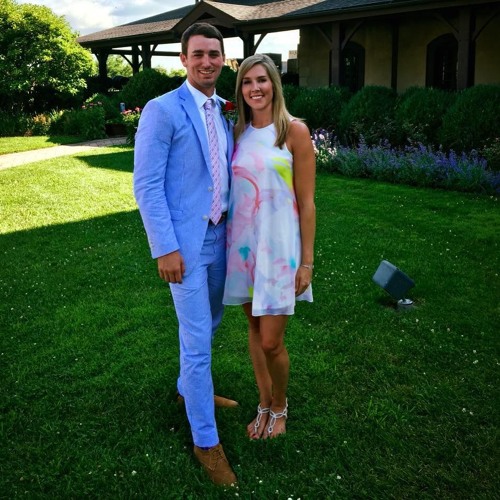
John Willard and Lauren Sisler
Photo courtesy from their website.

When Sisler is not reporting or producing she travels all around the world bringing awareness to prescription drug abuse. Many things have occurred in Lauren Sisler’s life and many more are still yet to come. In the near future, Sisler will be getting married to her long time fiancé John Willard. The two have been engaged since 2018. Next time the world sees Lauren Sisler she will have a new last name.


COVID-19 forces convenience in an inconvenient state

Sa’Riah Ponder

April 22, 2020

An enlarged visual of the coronavirus. Photo courtesy from Monterey Country.

The spread of COVID-19 and the responses of industries and governments are unprecedented. However, the restrictions on the movement of people are causing disruption and impact on the entertainment industries. When you think of entertainment you may think about news, sports, film and their production crew. Any field dealing with a camera and microphone is involved.

Consumption of entertainment in venues such as sports, cinema, and theatre is impacted remarkably in the short term and maybe even long-term by the pandemic. Sports has been particularly hit hard and was one of the first collective professional organizations to respond, initially playing games in private sessions passively. Then they took an assertive approach by stopping leagues and events entirely. The consumption pit that sports have created for live and televised sporting events is giving the opportunity for other forms of entertainment to fill.

Speaking of fill the media and entertainment industry has great shoes to fill this summer due 2020 Summer Olympics has been canceled and rescheduled to 2021.

Not only is it affecting events like the Olympics but the pandemic is so effective that it is causing companies in the industry to renegotiate contracts. For example, television rights deals face the risk of re-evaluation if the shutdowns carry on. 

Broadcast companies’ contracts but also team- player contracts are being negotiated. Contracts are ending and there is a such thing as free agents. One of the sports leagues, in particular, the NFL have put stipulations in, saying if players do not pass the physical after signing a given contract during this period the players can and will forfeit signing bonuses.

The positive is broadcasters can still do their job. The trading period is similar because many times the media get press releases via emails from teams informing them on interest in players. Instead of a physical press conferences for the media to get their information, teams are setting up phone conference or interviews.

The virus seems like it is topping the charts of virus history. This pandemic has put a halt to everything. COVID-19 has been so effective that it has slowed down crime. With everything in the entertainment business coming to a halt, one might ask how can the industry stay productive? Restrictions concerning groups of people working have already started.

Adaptability

Since COVID-19, these industries have had to adapt to the conditions. For example, every employee in the media industry has been practicing social distancing by working from home. Broadcast companies have informed their employees to make a studio space at home. They have also granted the employees access to equipment to properly broadcast since then television views have been a rollercoaster. Brian Jones, CBS sports reporter briefly talked about his and CBS’s role of this pandemic.

“I know for us we have been trying to stay as normal as possible. I do sports so there is not much for me or my department to do right now,” said Brian Jones.

In the meantime according to TechCrunch, media consumption has risen and has hit nearly 60 percent. Although money is cycling through broadcast carriers, other companies are being less productive. This economically is putting companies and countries behind.

One thing sports fans can count on is that every next season of spring sports will make up for this break, especially for the college sports fans. The NCAA has announced that the seniors of spring sports can return and play for their last year.

The entertainment industry needs to plan for dips in demand. According to Midia Research, there are three stages of viewership to television outlets. The collapse, peak, and revival.

Although the government has known about this pandemic for months, the companies are handling it well. With the home studios, entertainers and broadcasters are producing content like normal but most are having trouble with quality. 

Quality is the reason there was at first a traumatic decline causing views to go down. Entertainers and broadcasters are giving viewers cell phone material on television making it hard for viewers like Kameron Usury to stay engaged.

“I’m an aspiring journalist so I get it. I understand. But for the quality they are giving me I would rather look at it on my phone through one of my social media accounts, says Usury. I expect that because that is how my mind has been trained. Social media is a place where professional and regular people are mixed.”

Different social media platforms. Photo courtesy from Media Venue.

Which leads to the only option, social media. What can it do for these companies? Social media are these companies’ best friends at least while the pandemic is ongoing. Companies are leaning on social media platforms to get their content out.

Social Media

Now the peak, the stage which the world is in currently. Everyone from professional media outlets to athletes, creators, and normal people are pumping out content.

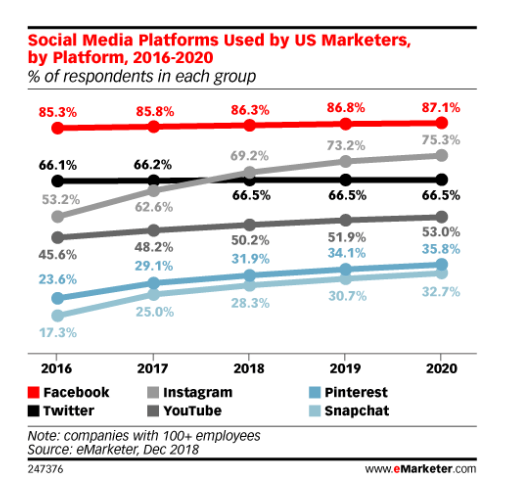
To put things in perspective social media activity has sky-rocketed since the transition. According to Sprout Social, social media is booming and is not slowing down anytime. The active user rate is increasing.

People are collectively creating challenges, these challenges consist of exposing individuals’ talent such as dancing, singing, showing off their humorous side and athletics to keep from boredom. Athletes across every league have participated in these challenges.

It’s hard to believe now, but there was a time when Twitter, Facebook, Instagram and other platforms of “participatory media” were widely heralded as a gift to the public. For nearly half a decade, the tone for social tech companies and social media has shifted. As COVID-19 continues to spread around the world and things continue to be up in the air, people are starting to remember why these platforms we love to hate are important.

A graph showing media activity. Photo courtesy from Sprout Social.

If the pandemic persists long enough to keep the population home-bound for months, the industry is going to start running out of new content to deliver to their audiences. 

There is always good and bad. The bad is running out content. Depending on how long this pandemic continues, companies will run into problems of curating creativity like new ideas and content.

Lastly the revival stage. This stage will happen at the beginning of people running out of ideas.

Viewers will start to get bored or overwhelmed. To fix the problem before it happens, companies and their employees are adjusting. Erin Houston, creative design associate, talks about how WarnerMedia is trying to strategically attack the pandemic.

Opportunity for creativity

“We (departments in WarnerMedia) had a meeting, the meeting basically was about pacing. How much, how fast we should produce and promote content,” Houston said.

An outside person looking in, pacing may be the only solution to prevent companies from running out of content. If the content gets low you know what they say history repeats itself. 

This may be a creative renaissance. In history adversity often resulted in powerful creativity. Creators may find themselves inspired to craft some poignant and impactful content and material they have ever created. The world may be on the verge of a golden era caused by the fear of a lack of creativity. Some may even find themselves forced out of creativity altogether.

 No one knows what the future holds but the media industry as a whole may come out of this pandemic crisis with some of the most powerful creative ideas they have ever had.

Although ideas will run out social media has been providing instant alerts for the people globally to keep communication flowing throughout the world.

One thing that can be guaranteed is the fan experience will heighten. Think about it everyone has been in their homes for weeks and we are in the midst of the pandemic now. As stated earlier social media activity has risen. People are glued to the television and cellular devices becoming couch potatoes and zombies. 

“I have been relaxing, enjoying my family and time. This was very much so needed,” Brian Jones said.

People like Brain that work the sporting events are also anticipating human interaction again. 

“You cannot beat the atmosphere of any sports arena. The crowd yelling and chanting as their team or favorite player is giving them chances for positive opportunity, Jones said. Think about it, some of us have not had an in-person interaction in a while. So at tailgates drinking that beer, blasting the music having that fun is going to intensify. You know what else is going to intensify ratings because although our devices have us consumed right now…there is nothing like sports.”

The entertainment industry may be on a halt but it is not out of business. As long as sports exist you know there is always a chance for a comeback. 

Although, the world is taking a vacation and there is not much to do. This is a perfect time to find your niche and start working to perfect it. Quarantine, practice social distance, wash your hand and cough sneeze in your arm. What a time to be alive? Roll Tide.

Design a site like this with WordPress.com
Get started